About the ARTILLERY project
The ARTILLERY project is a European research initiative that aims to improve long-term health for people who have been treated for breast cancer.
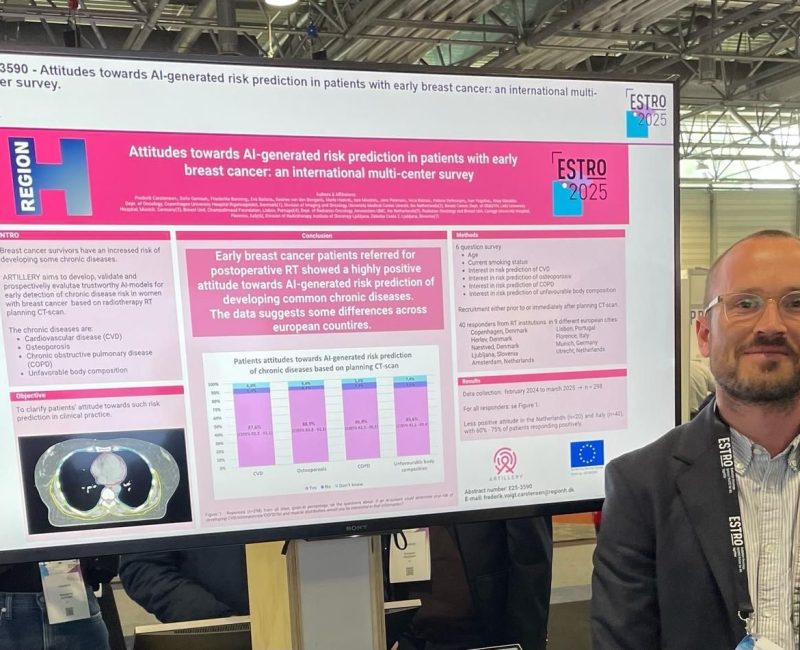
Many breast cancer survivors live long and healthy lives after treatment. However, some may face a higher risk of other chronic diseases later in life. These can include cardiovascular disease (CVD), osteoporosis, obesity and chronic obstructive pulmonary disease (COPD).
ARTILLERY is developing new artificial intelligence (AI) tools that analyse CT scans already taken during routine cancer care. These scans are commonly used in radiotherapy planning and follow-up.
The innovative idea behind ARTILLERY is simple: instead of performing additional tests, the project explores how these existing images could also help identify early signs or increased risk of other diseases.
If successful, this approach could help doctors:
- detect risks earlier
- monitor long-term health more effectively
- support a better quality of life for breast cancer survivors
ARTILLERY brings together researchers, clinicians, patient advocates and technology experts from several European countries.
Patient representatives are actively involved in the project to ensure that the research remains meaningful and relevant for people living after cancer.
Making research easier to understand
Research projects are often described using complex scientific language that can be difficult to understand.
In the patient’s corner, we will share updates about the ARTILLERY project in clear and accessible language, so that patients, families and the wider public can follow the progress of the research.
Here you will find:
- updates about the project
- explanations of the research in simple terms
- news about project meetings and milestones
- insights from patient representatives involved in the project
Why patient involvement matters
Patient representatives play an important role in the ARTILLERY project.
They help ensure that the research reflects real-life needs, priorities, and concerns of people living after breast cancer.
Their role includes:
• bringing the patient perspective into the project
• helping translate complex information into understandable language
• supporting communication with the wider community
Key facts about ARTILLERY
• Funded by the Horizon Europe programme
• Focus: long-term health after breast cancer
• Technology: AI analysis of CT images
• No additional tests needed
• Goal: early identification of health risks
Conditions studied:
• cardiovascular disease (CVD)
• osteoporosis
• obesity
• chronic obstructive pulmonary disease (COPD)